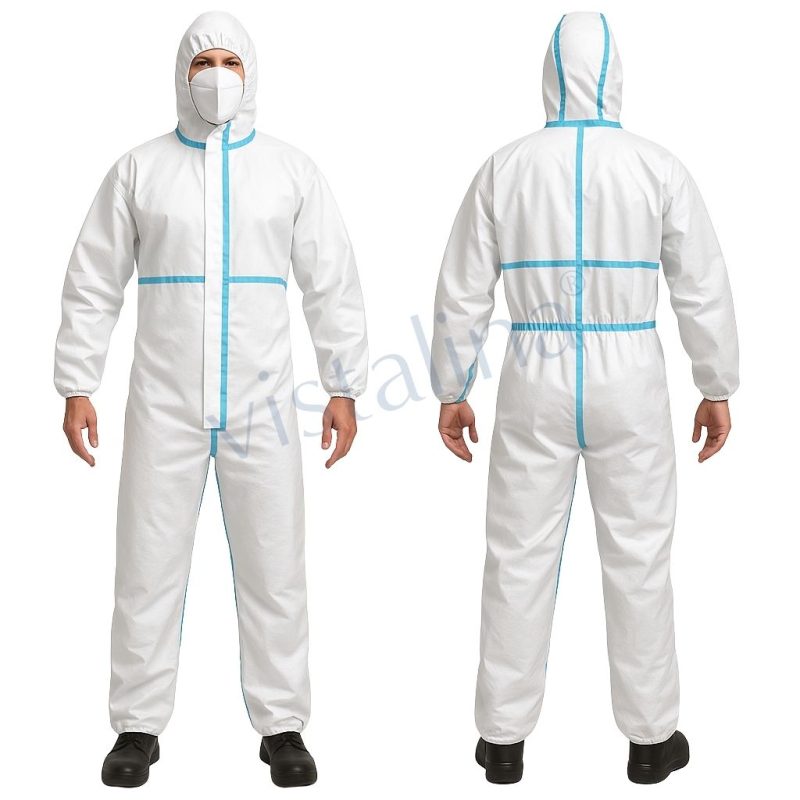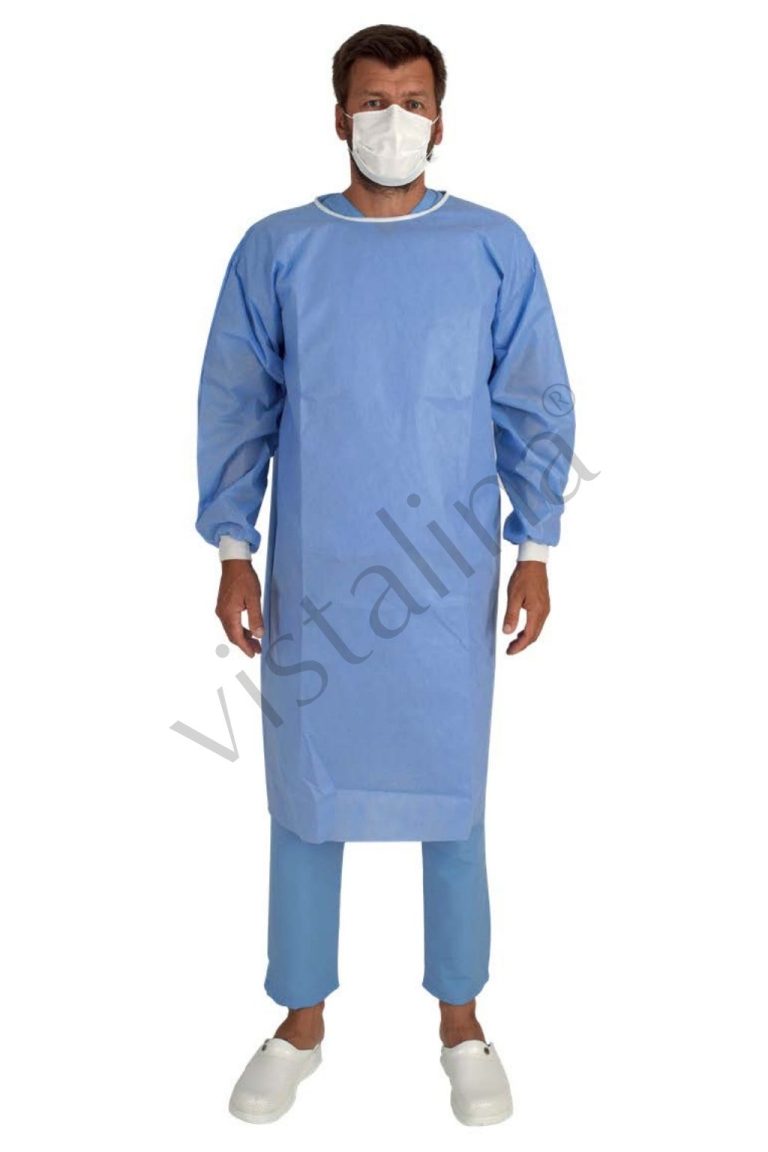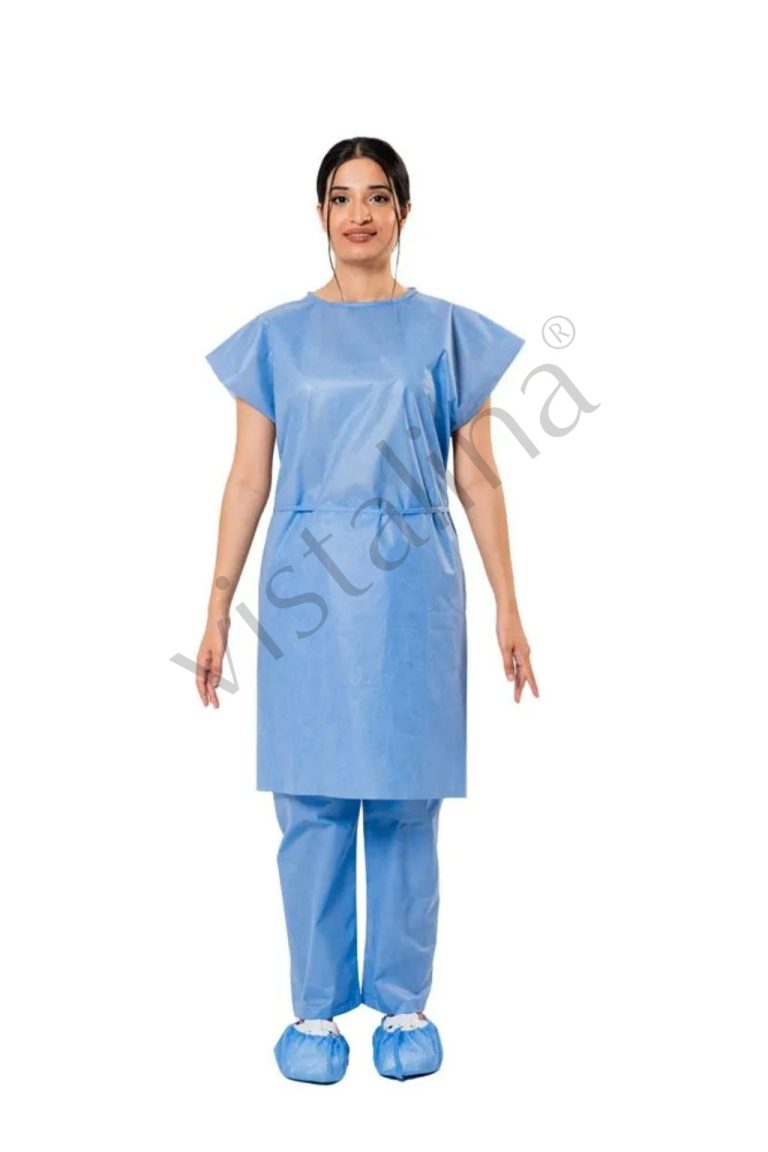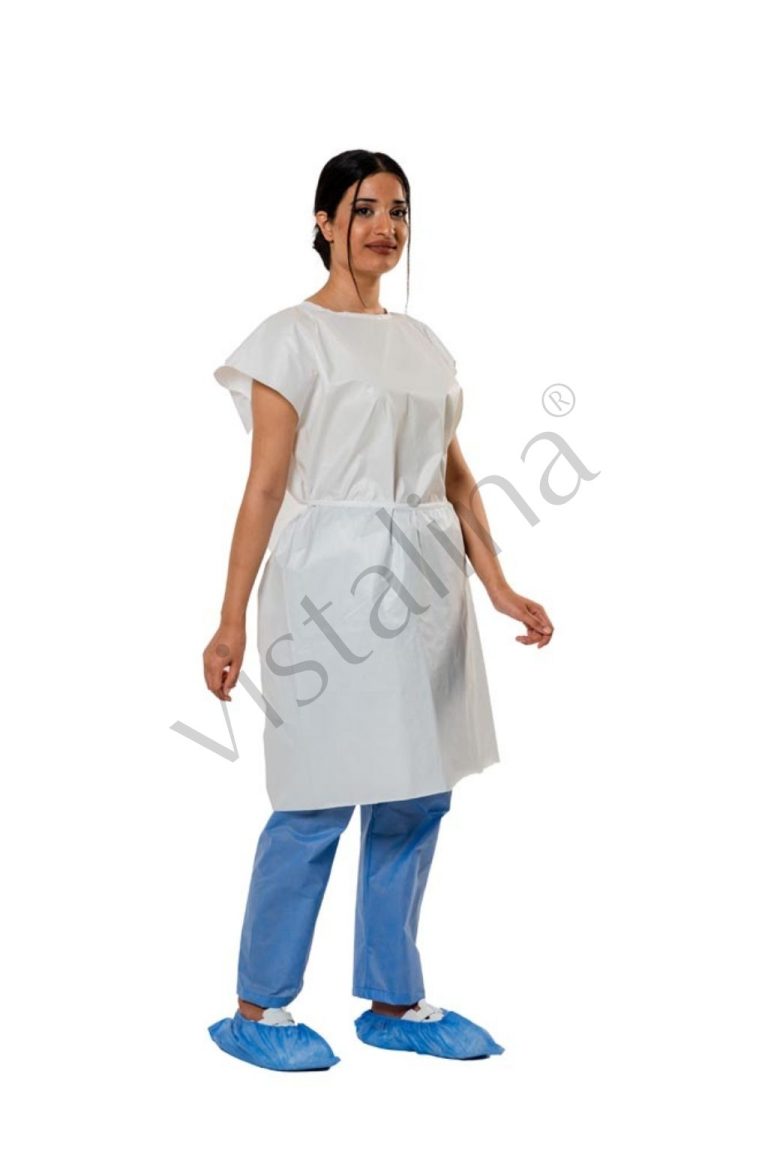



Ultrasonic welding joins nonwoven fabric by melting the polypropylene fibres together with high-frequency vibration, so the seam has no needle holes and no thread. Stitched seams use needle and thread, which is strong and flexible but leaves holes that can let liquid and particles through. For barrier products such as surgical gowns, masks and protective coveralls, ultrasonic or taped seams give better protection; stitched seams suit light protection and visitor garments.
The seam is often the weakest point of a protective garment. A gown made of a high-barrier fabric can still fail if liquid passes through the needle holes along the sleeve. Understanding how seams are made helps buyers compare products that look the same on a data sheet. This guide explains ultrasonic welding, stitched seams and taped seams and where each is used.
Ultrasonic welding vs stitched seams
| Property | Ultrasonic welded seam | Stitched seam | Stitched and taped seam |
|---|---|---|---|
| How it is made | Fibres melted together by vibration | Needle and thread | Stitched, then covered with a sealing tape |
| Needle holes | None | Yes | Covered by tape |
| Liquid barrier at the seam | High | Lower | High |
| Flexibility | Good, can be stiffer | Very good | Good |
| Suitable fabrics | Thermoplastic nonwovens such as PP spunbond and SMS | Almost all fabrics | Film-laminated and microporous fabrics |
| Typical products | Surgical gowns, masks, caps, shoe covers | Visitor gowns, lab coats, Type 5/6 coveralls | Type 3/4 coveralls, high-barrier gowns |
How ultrasonic welding works
Because ultrasonic welding needs thermoplastic fibres, it works very well on polypropylene nonwovens but not on cotton. That is why washable cotton gowns are always stitched.
What to check when buying
- Ask how the seams are madeThe data sheet should state whether seams are ultrasonic, stitched, bound or taped.
- Check the critical zonesLook at the sleeves and shoulders of gowns and the crotch and zip area of coveralls.
- Do a pull testPull the seam gently by hand; a good weld or stitch does not open or tear the fabric next to it.
- Match the seam to the riskChoose ultrasonic or taped seams where liquid contact is expected.
Coverall type ratings also depend on seam performance. See our guide to Type 5 and 6 coveralls and our full-body coveralls: Type 5 and 6 coveralls explained and Type 3B/4B coverall.
Frequently asked questions
What is ultrasonic welding in medical textiles?
A joining method that melts thermoplastic fibres together with high-frequency vibration, creating seams without needle holes or thread.
Are ultrasonic seams stronger than stitched seams?
Not always stronger, but they give a better barrier because there are no holes. Stitched seams are very strong and flexible.
Why are some coveralls taped?
Tape covers the needle holes of stitched seams so that the coverall can pass liquid-tight or spray-tight tests, such as Type 3 and 4.
Can cotton gowns be ultrasonically welded?
No. Cotton is not thermoplastic, so washable cotton gowns are stitched.
Need high-barrier seams?
Tell us your protection level and we will recommend the right seam and fabric.
Request a quote